What Is a VPN and Do You Actually Need One? (Plain English Guide)
By Ken Hollow, the man who had to explain encryption to someone who thinks her WiFi password is a “digital incantation” I knew it was…
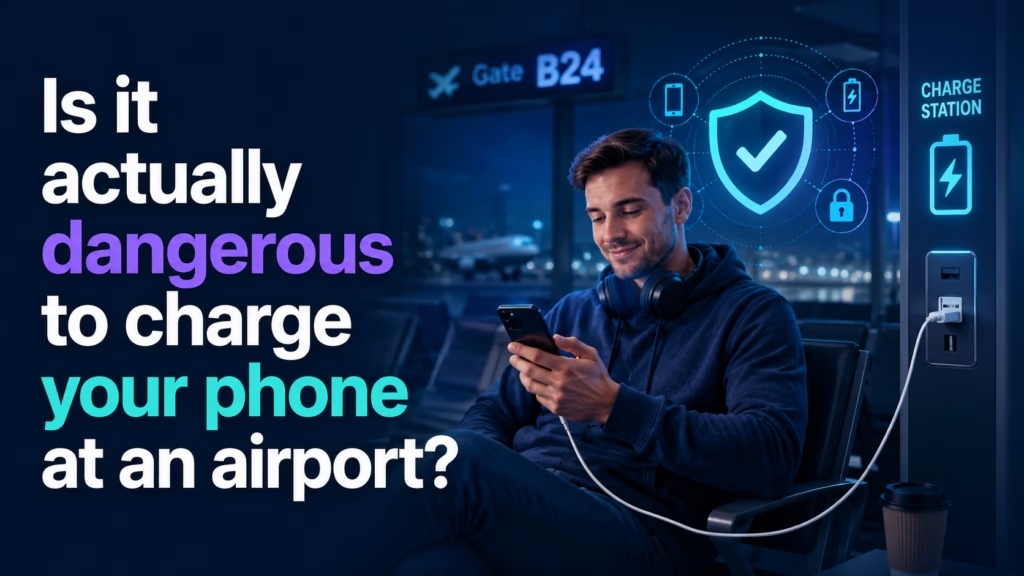
By Ken Hollow, who watched a fox spirit refuse to charge her phone in an airport for four hours and then complain the entire flight that her phone was dead
“Ken. I read that airport chargers steal your soul.”
“Your data. And mostly no.”
“The FBI said it.”
“An FBI field office tweeted it. There’s a difference, and the difference turns out to matter quite a lot.”
“Juice jacking” — stealing data through a public USB port — is technically possible but has essentially never been documented happening to real people. The 2023 FBI warning that went viral was a routine advisory with no specific incident behind it, and reporters who followed up found no confirmed cases. Modern phones also ask permission before allowing any data connection over USB. Charge your phone at the airport. There is a genuine reason to bring your own plug, but it isn’t hackers.
In April 2023, the FBI’s Denver field office posted a short public-service message advising travellers to avoid free public charging stations. It was picked up by hundreds of outlets within days and became one of those warnings that everyone half-remembers ever since.
When journalists asked what prompted it, the answer was: nothing in particular. Security reporter Brian Krebs followed up directly and found the post was a standard advisory derived from older FCC consumer guidance, not a response to any case. The field office confirmed there was no specific incident behind it, and the FCC was reportedly surprised by the sudden attention to guidance that had been sitting on its website for years.
Snopes, examining the same claim, reached a similar conclusion: the attack is technically possible, but no evidence has been presented that it is happening at any meaningful scale.
So the honest position is not “this is impossible.” It’s that a theoretical attack got treated as breaking news, and the resulting advice has been repeated confidently ever since by people who never checked whether it had happened.
The theory: a USB port carries both power and data. A maliciously modified port or cable could, in principle, attempt to access the connected phone or install something on it.
For that to work against a modern phone, an attacker would need to physically compromise a charging station or plant a modified cable, without being noticed, in a location like an airport that is comprehensively surveilled — and then defeat the protections phones have added specifically against this.
That last part is the real obstacle. Since iOS 7 and equivalent Android versions, phones do not permit data access over USB by default. Plug into an unknown port and your phone either charges silently or shows a prompt — “Trust this computer?” on iPhone, or a notification defaulting to “charging only” on Android. Data does not flow unless a human taps yes.
An attack requiring physical access to infrastructure, in a monitored public space, that then depends on the victim actively approving a suspicious prompt, is not a good attack. That is likely why, despite a decade of demonstrations at security conferences, confirmed real-world victims remain elusive.
“So it’s real but it doesn’t happen.” — It’s possible but not practical. Like being struck by a meteor while holding a winning lottery ticket. “That happens?” It could. “Ken, that’s not reassuring, that’s just physics being rude.”
None of them are hackers. All of them are more likely to actually ruin your day.
Airport USB ports are extremely slow. Many older ports deliver a trickle — enough to add a few percent over an hour while your screen is on. You’ll feel like you charged. You didn’t. A wall outlet with your own fast charger is dramatically quicker.
The cables left behind are junk. The frayed communal cable dangling from a charging tower has been yanked by a thousand travellers. Poor-quality and damaged cables genuinely can deliver unstable power.
You have to stay next to it. The real airport risk is leaving your phone unattended at a charging station in a room full of strangers and hurrying to a gate. Theft is common. Juice jacking is not.
A power bank solves all of it. Charge in your seat, charge while walking, charge on the plane. No ports, no cables, no standing next to a pillar.
If you want to spend your security attention somewhere useful, spend it here:
Fake WiFi networks. Setting up a rogue hotspot named “Airport_Free_WiFi” requires no physical access, no hardware tampering, and no victim tapping a trust prompt. It is vastly easier than juice jacking and correspondingly more common. Our guide on whether public WiFi is safe covers how to spot them.
Shoulder surfing. Someone reading your screen or watching you type a passcode in a crowded gate area. Low-tech, effective, entirely unpreventable by charging habits.
Losing the device. The single most likely bad outcome of any trip. Which is worth having a current backup for, and a screen lock that isn’t 0000.
No judgement — some people would simply rather not, and the mitigations are cheap.
Use a wall outlet instead of the USB port. A standard plug socket carries no data. This removes the theoretical risk entirely, costs nothing, and charges faster. If you do one thing, do this one.
Carry a power bank. Better answer to the actual problem, which is your battery.
Use a “data blocker” if you like. A small adapter that physically omits the data pins. They work. They’re also solving a problem your phone’s trust prompt already solves.
Never tap “Trust” on a prompt you didn’t expect. If you plug in to charge and your phone asks whether to trust a computer, say no. Charging does not require trust.
“So I sat with a dead phone for four hours for nothing.” — For a theoretical risk that has no confirmed victims, yes. “I want the four hours back.” I want the flight back, Nana. You narrated the safety card.
Juice jacking is technically possible but has essentially never been documented against real people. The viral 2023 FBI warning was a routine advisory with no incident behind it — reporters who followed up confirmed there was no specific case. Modern phones block USB data access by default and require you to actively approve a prompt, which makes the attack impractical. Charge your phone. Bring your own plug for real reasons: airport USB ports are slow, communal cables are damaged, and leaving a phone unattended invites theft. If you want the theoretical risk gone anyway, use a wall socket rather than a USB port — it carries no data and charges faster. Spend your actual caution on fake WiFi networks instead.

Hi. I’m Ken. I run Two Second Solutions, a one-man agency that somehow landed a fox spirit influencer as a client. I drink too much coffee, blog when I need to vent, and regularly update my résumé just in case she sets the office on fire again. I’m not crying — it’s just spell residue.
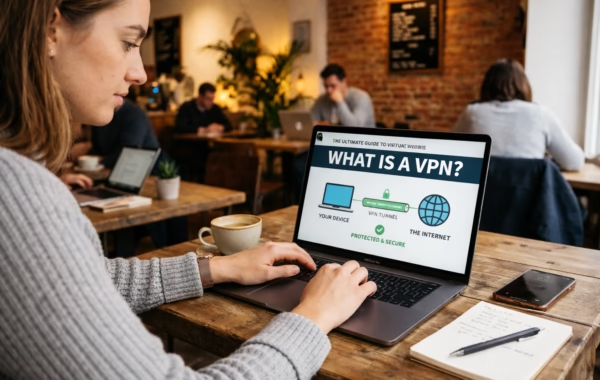
By Ken Hollow, the man who had to explain encryption to someone who thinks her WiFi password is a “digital incantation” I knew it was…
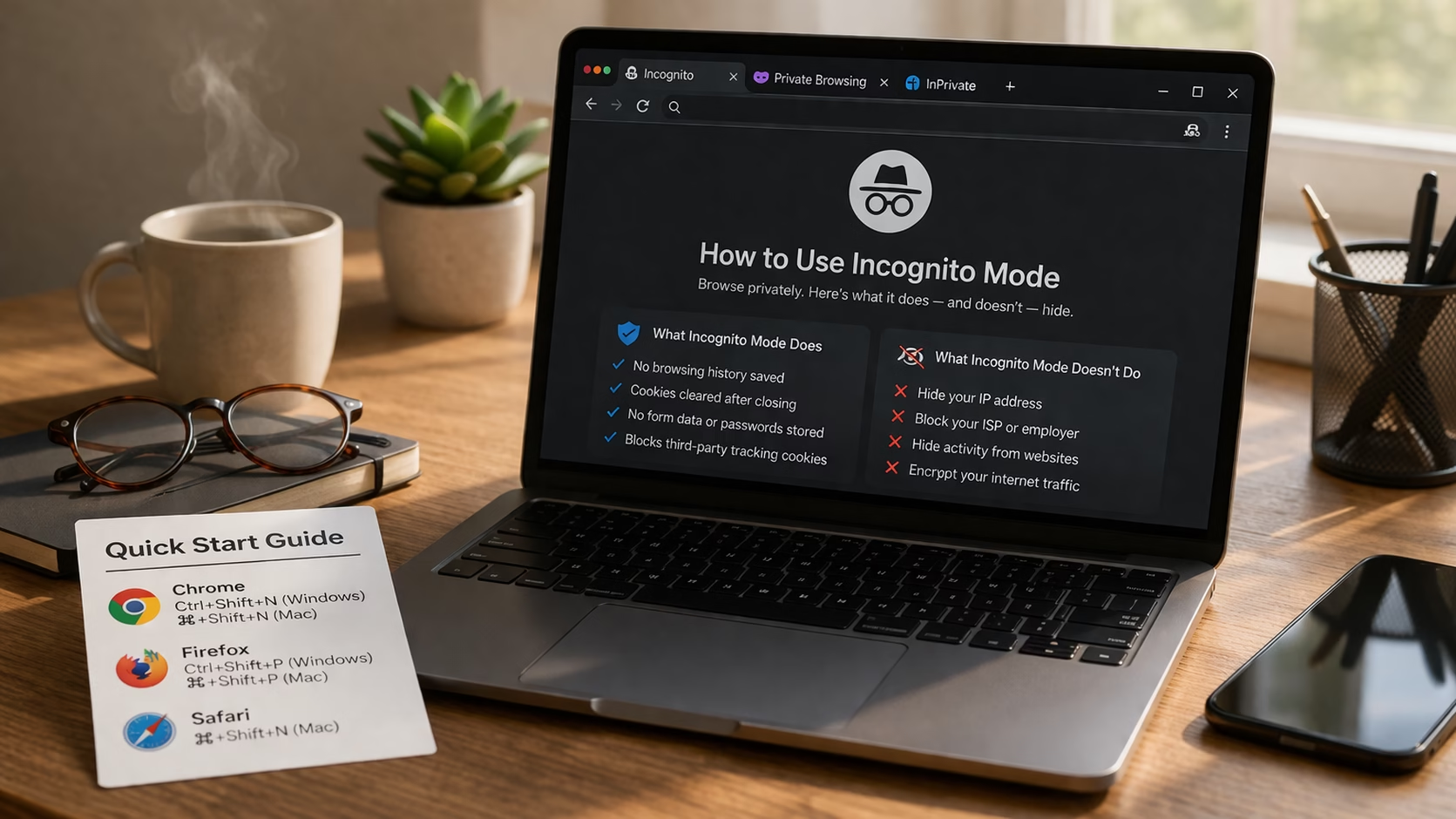
Spoiler: Less Than Nana Thinks By Ken Hollow, reluctant IT department for a fox spirit who thinks private browsing means “the internet can’t see me”…
By Ken Hollow, who is not on anyone’s family plan and yet somehow still gets asked to explain them “Ken. Hypothetically.” “That word never precedes…