Low-Hanging Fruit, My Ass
By Ken Hollow, unwilling gardener of corporate metaphors If one more brand manager tells me to “pick the low-hanging fruit,” I’m going to climb the…
By Ken Hollow, reluctant tech correspondent with a migraine
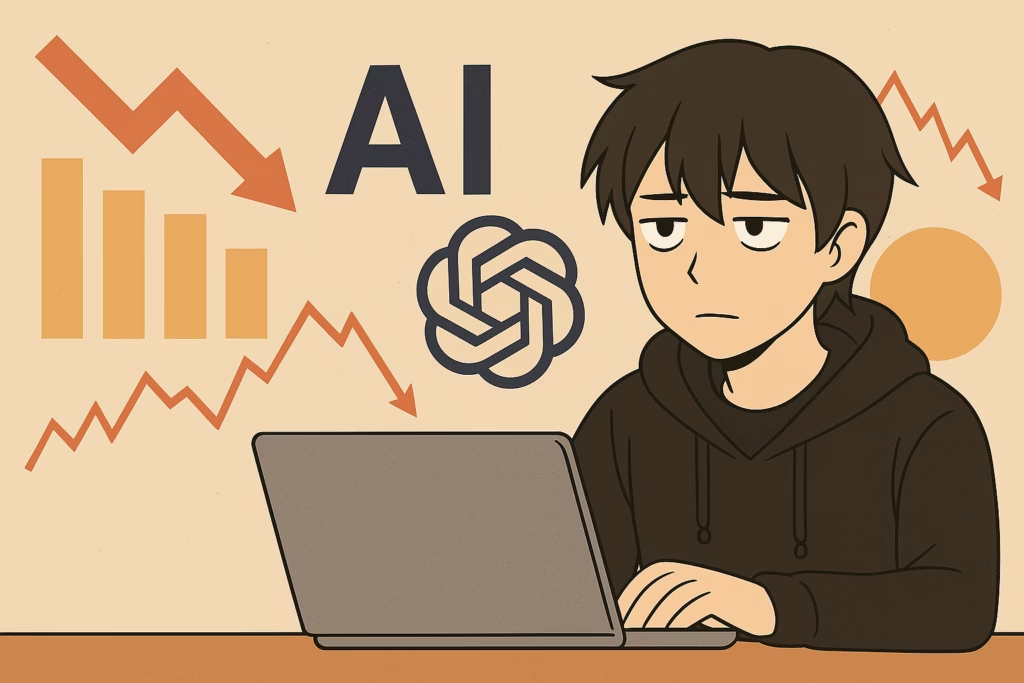
It finally happened: someone in Silicon Valley said the quiet part out loud. OpenAI CEO Sam Altman admitted that the current wave of AI hype might look suspiciously like the dot-com bubble in its final Red Bull-fueled days. Billions have been poured into AI companies promising to reshape the universe, but profits? Not so much.
Altman’s remarks land at a time when valuations are stratospheric, GPU shipments are treated like rare earth minerals, and every company insists it’s an “AI-first platform” (translation: they added ChatGPT to their app and called it innovation). It’s not just startups either—Microsoft, Google, and Amazon are in an arms race to pump billions into AI infrastructure, despite many tools still being experimental or, worse, glorified autocomplete.
“We may be in a bubble. Investment is far ahead of real-world returns. The trajectory looks a lot like the late 90s,” Altman said during a recent talk, as reported by The Wall Street Journal.
Adding fuel to the skepticism, OpenAI’s own GPT-5—hailed as a supposed leap forward—hasn’t entirely lived up to the prophecy. In fact, the company briefly reverted users back to GPT-4 after complaints of underwhelming performance. Cue the investors sweating in their Patagonia vests.
It’s the classic hype cycle: promise the moon, deliver a telescope, then ask for another billion dollars. The tools are impressive, yes, but they’re still far from generating the kind of consistent, world-changing results that justify trillion-dollar market projections.
If you’re old enough to remember the dot-com boom (or cursed enough to have studied it in an MBA course), this all sounds familiar:
The difference this time? The tech actually works—but maybe not at the scale the hype demands. Which means when the correction comes, it’ll sting, but it won’t be a total collapse of the internet. Probably.
Despite the warnings, money keeps flooding in. AI infrastructure spending topped $13.6 billion in 2025 and is growing at over 28% annually. Venture capital firms are still treating anything with “AI” in the pitch deck like golden lottery tickets.
But as Reuters noted recently, cracks are appearing: tech markets have been jittery, with “AI doubts” cited as one of the main drivers of volatility.
Altman isn’t wrong. The hype-to-revenue ratio is wildly out of sync, and the market’s collective hallucination that AI will instantly turn into a profit geyser is, frankly, exhausting. But unlike the dot-com era, AI has genuine utility and adoption—so even if the bubble pops, something will remain.
Until then, we’ll keep circling the hype cycle, refreshing models, and pretending that this one will be the breakthrough. Investors will keep circling back, chasing returns that don’t exist yet. And I’ll keep doomscrolling, waiting for the inevitable Medium posts titled “What We Learned From the Great AI Crash of 2026.”
Ken Hollow, unpaid bubble historian, reluctant prophet of tech doom

Hi. I’m Ken. I run Two Second Solutions, a one-man agency that somehow landed a fox spirit influencer as a client. I drink too much coffee, blog when I need to vent, and regularly update my résumé just in case she sets the office on fire again. I’m not crying — it’s just spell residue.
By Ken Hollow, unwilling gardener of corporate metaphors If one more brand manager tells me to “pick the low-hanging fruit,” I’m going to climb the…
By Ken Hollow, the man who outsourced his executive function to a language model for seven days and has feelings about it It started as…
By Ken Hollow, professional scheduler of posts I didn’t really write anymore Ah yes, imposter syndrome — an old friend. But in 2025 it’s evolved,…